|
Lanterns
1 |
|
|
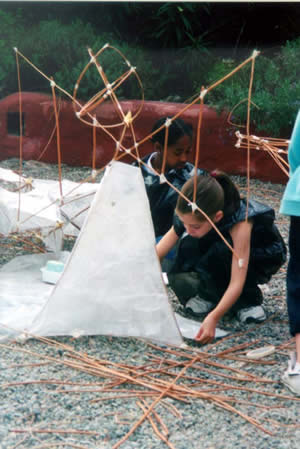
This pack is
designed to help you create hand made lanterns. Starting with a framework of
willow sticks (withies), the basic shape is covered with tissue paper soaked
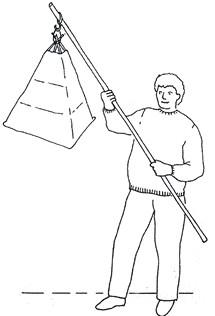
in glue and lit internally by a candle. The lantern can be carried on a
bamboo stick outdoors, as part of a procession. If you have not made a
lantern before, we would strongly urge you to try some of the simple shapes
first, before embarking on anything more ambitious. Lanterns designed for
display or indoor use must be lit electrically – either battery or mains,
maybe with a loom of small bulbs wired up. |
Inside you will
find a list of all the materials you will need, and detailed instructions on
how to make a lantern. We also show you how to create and manage a lantern
procession, including suggestions of themes you might use. Colour needs to be
carefully thought about. A mass of simple forms looks lovely with just the
natural amber glow of the flame. The simplest way to add colour is to make a
collage of coloured tissue paper. Specialist paints can be used but they are
expensive and can lead to complications. They must be translucent; not all
pigments are, so you must be sure to do your own tests. Silhouettes from cut
paper are an effective and cheap way of adding detail. Emulsion paint is
hopeless; when the lantern is lit it will look black. Once you are
familiar with making simple lanterns, you can try more ambitious sculptural
forms, using bamboo for strength. Large lanterns may be carried on a
framework by two or four people, and lit by hurricane lamps. Joints should be
drilled and wired, then bound with strong tape or strips of cloth and glue.
White cloth (natural fibre) makes a stronger covering. Fabric dyes can be
sprayed or painted on. Figurative
lanterns can be constructed on a “back pack” – an old rucksack frame will do
– and worn by a robust person! Remember, triangles are vital for stability in
construction, foam rubber padding for comfort. For more detailed
information about lantern making, please refer to the Welfare State International handbook,
Engineers of the Imagination, in the “how to do it” section. |
|
Lanterns 2
|
|
|
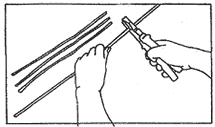 2. Cut 4
withies the same length for the base.
2. Cut 4
withies the same length for the base.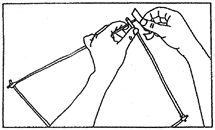 3. Join
them at the corners with masking tape.
3. Join
them at the corners with masking tape.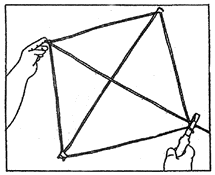 4. Add 2
diagonals.
4. Add 2
diagonals.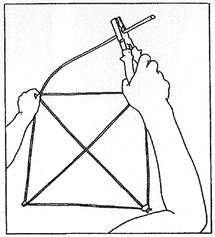
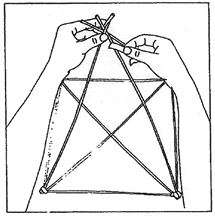
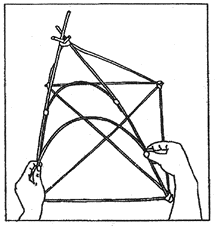
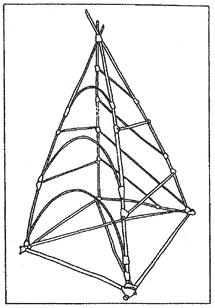
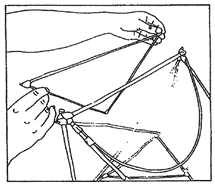
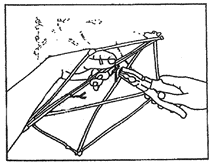
|
Lanterns 3 |
|
|
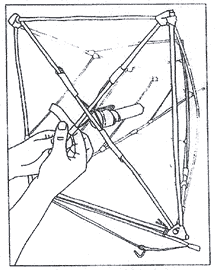
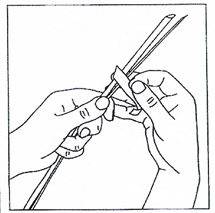
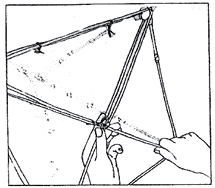 11. Make a simple wire hook to close the
door.
11. Make a simple wire hook to close the
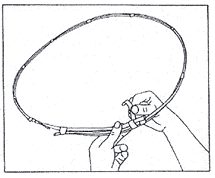
door.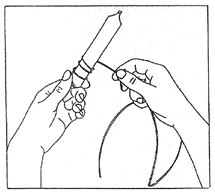 12.
Use one piece of wire (approx. 1 metre long). First, twist one end of the
wire round the candle……..
12.
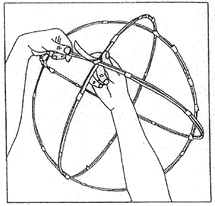
Use one piece of wire (approx. 1 metre long). First, twist one end of the
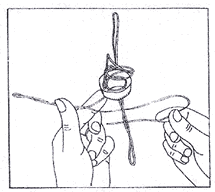
wire round the candle……..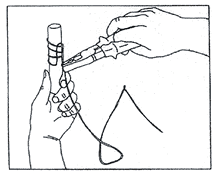 13.
and loop it back on itself.
13.
and loop it back on itself.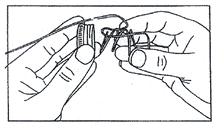
Lanterns 4
|
OTHER SIMPLE SHAPES: |
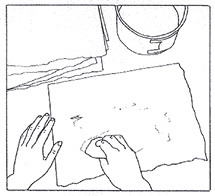
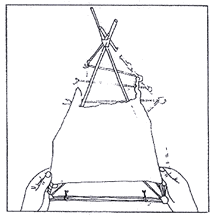
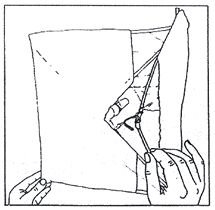
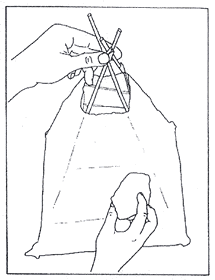
COVERING
THE LANTERN |
WARNING: DON’T WEAR A SHELL SUIT OR NYLON ANORAK |
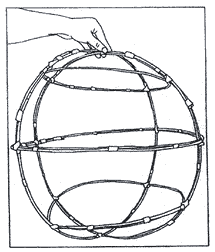
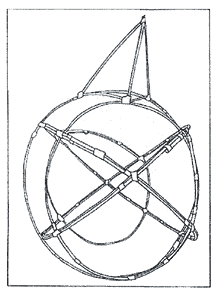 21. This is a very strong sphere which
you can turn into a face, an animal,
21. This is a very strong sphere which
you can turn into a face, an animal,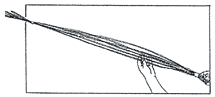 22.
Make a sheaf of 6 withies. Tape at the bottom and near the top.
22.
Make a sheaf of 6 withies. Tape at the bottom and near the top.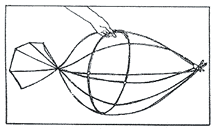 23.
Add a circle and it becomes a fish. Work the thin end into a tail.
23.
Add a circle and it becomes a fish. Work the thin end into a tail.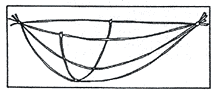
|
Lanterns 5 Materials Withies – Willow Sticks |
|
|
J Burdekins Ltd. |
P.H Coate & Sons |
|
Strong Tissue Paper – “Wet Strength” |
|
|
All the
following are available from D.I.Y or hardware stores:
|
|
Lanterns 6
|
DESIGNING YOUR
LANTERN Anything can lend
itself to becoming a reason for having a lantern procession, whether you are
celebrating, protesting, or simply feel like organising a procession! One of
the greatest difficulties can often be finding the motivation to begin. Possible examples
are:
More “open” topics
could be:
It is good to be
particular - our community, our district, town, village etc. People could
make images of where they live – their block of flats, house, the house of
their dreams – or well known landmarks, such as the bridge, the Town Hall
Clock, the brewery; or the products of their local industry – silencers, nuts
and bolts, helicopters…..in other words absolutely anything can be used as
the basis for a lantern or a procession. ... |
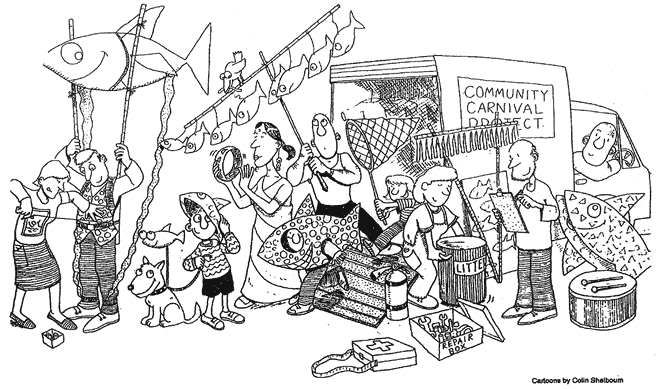
Explore all angles
of your theme, for example: The Sea – Fish, Birds, Boats, Lobster Pots, jellyfish, Plankton, Pollution, Lighthouses, buoys
Anniversary of the
Tolpuddle Martyrs – convicts in black and white stripes, a convict ship in
full sail, justice balancing the scales, Australian animals, the tree where
the trial took place….. Charles Babbage,
son of Totnes – look at all the things he invented – computer, cowcatcher,
maritime lights, stomach pump, codes, cyphers, locks, keys etc.. an effigy of
the man, his school, his house…. Whatever the theme, make sure you are well informed about all the background details, so that you can have as wide a variety of lanterns as possible. Anything can be represented by a lantern and you want your procession to look as varied and interesting as possible. |
Lanterns 7
|
THE PROCESSION PREPARATION DESIGNING YOUR
PROCESSION |
Take it to the
assembly point. Insist on the plan and have your stewards take charge. No-one
overtakes the front. Think about where you put the band – not necessarily at
the front. Those at the back can feel forgotten and dispirited; in the middle
works well. If you’ve got an
acoustic band – negotiate carefully with the organizers for a good position
in the procession. Make sure you are not behind the truck with the rock band
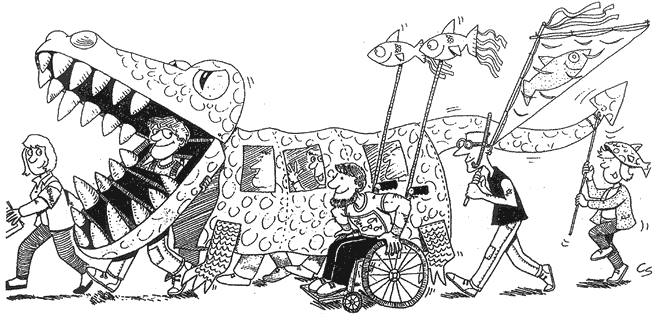
or the DJ with the big PA. Put a strong image at the front, people will hear and see you coming. Height is everything. Light structures/banners that move, that are comfortable to carry can be handled in the wind. Let the wind go through, don’t fight it. Cut scollops in your banner – you will still read it. Leave gaps in large structures. Look at traditional belts for carrying poles. |
|
|
|
Lanterns 8
|
Arriving Let participants
know the exact time and place to assemble and what to wear. It is best to
give out information sheets, with a map, well in advance. Include the finish
time (take spare copies for the event itself). Departing |
this may not be
possible, so you need to get your transport there quickly. Work out your own
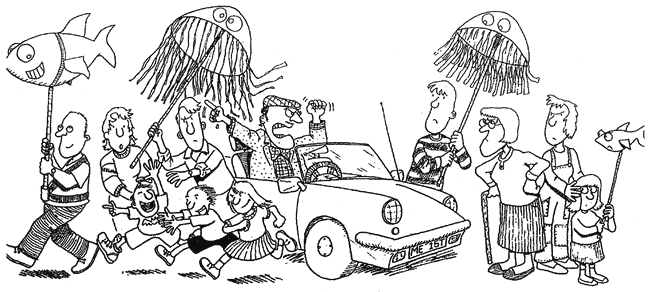
plan, in advance, (including who has the keys!) TRAFFIC CONTROL Watch out for excited, unescorted children running ahead on the road. Beware of unsympathetic, impatient drivers being thoughtless and unwilling to wait till you pass. |
|
|
|
Lanterns 9
|
MANAGING A
PROCESSION Plan for energy to
rise and fall in empty boring bits with no-one watching, preserve the energy
– a drumbeat, marking time (don’t peak too early) so that you can give it
everything down the High Street with the crowds. Agree and practice clear
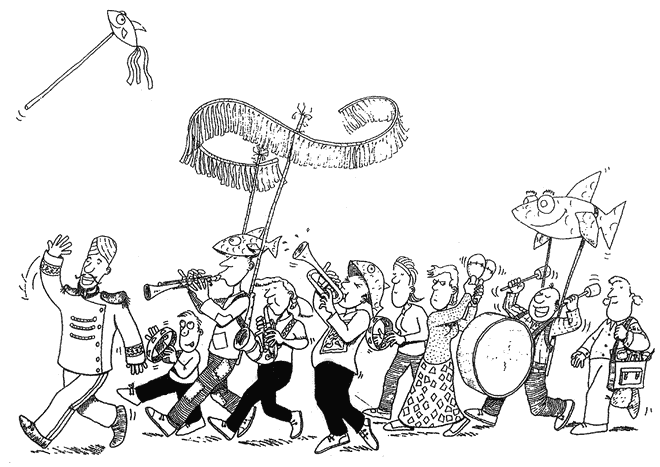
signals, whistles are good. In the band, put a
bandleader at the front. Usually bass drums at the back keeping time, brass
at the front, hand held percussion in between. There is a case for putting
trombones at the front. Brass musicians are quite vulnerable when playing in
a throng of excited youngsters. You must always have at least a couple of
people to accompany them. In your practices, arrange an order and stick to it, so musicians know who they are next to, who they are behind. |
Practice moving
and keeping in tight formation. In the excitement or tension of the day,
attention wanders and you can look a mess, but encourage people to keep each
other in formation. You cannot expect
musicians to be in charge of the route or to make decisions about crossing
the road. They are there to play music to the best of their abilities.
Stewards must take these responsibilities. Aim for a good finish – in your practices, make it clear you keep going/performing/playing until the agreed dispersal point (ideally out of sight). People are watching from behind as you retreat into the distance. Disintegration leaves a bad impression. |
|
|
|
Lanterns 10
|
STEWARDS If you are doing
your job well and have created a carnival mood, people will want to join in
on the day – tucking them in behind the band is a good idea – don’t let them
break up the formation. Stewards need to be friendly and patient but firm. DANGERS |
The front should
slow down, stop and wait for others to catch up. Pace is generally dictated
by the band – there is one comfortable pace for the bass drum player etc. and
that usually suits the whole thing. Wheeled structures also have difficulties
of their own with kerbs, gateways etc. Mixing motorised
floats with walking/dancing is not to be recommended. (The police will advise
on safe spacing). A vehicle travelling slowly throws out more fumes, making a
noise and is less flexible than wheeled structures that can be pushed. Mix
these elements with greater care, particularly at night. There is a risk of
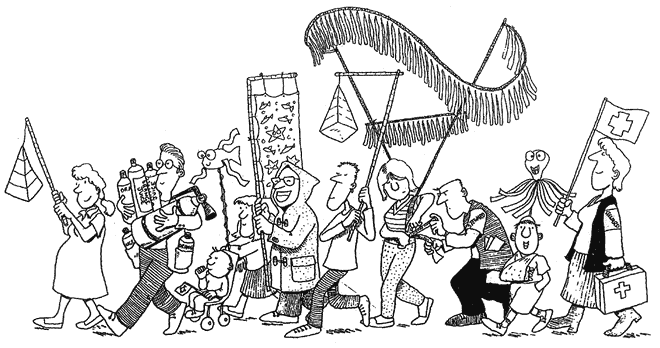
serious accident. For large processions and lantern processions, it is a good idea to inform the local fire brigade and if possible enlist the St. John Ambulance Brigade. |
|
|
|
Lanterns 11
|
WHAT IF……? Someone sprains
their ankle….they drop out, a steward or parent stays with them, while
another goes to get transport – or request help from the first aid
authorities. Someone wants the
toilet…although you will have drawn people’s attention to the nearest ones to
your arrival point, most cafes, pubs, garages are helpful to people in
costumes. Someone does not
turn up…you can always leave some costumes in the van. Someone’s friend who
turned up might be a good risk, but be sure to explain the extent of the
commitment. A musician does not turn up…then manage without the part. Last minute changes can panic your band if they are beginners. It’s a wise policy to double up on each section in case this happens. Your music may not be as rich, but it will be confidently played. |
There’s a funeral
or road accident…stop playing, quietly walk past to a suitable distance
before starting again. Be sensitive to normal everyday life that is
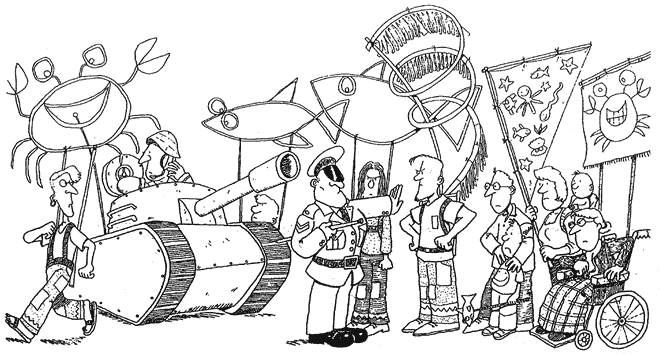
happening. At a show you find
yourself alongside the display of guns for kids to play on, or at the police
dog display…then it shows you did not do your homework properly. Many local
festivals and shows are dominated by military recruitment drives in the name
of entertainment. You may wish to check this out with the organisers in advance
and decide your own policy. THE WEATHER |
|
|
|
Lanterns 12
|
PACKING THE VAN Costumes and hats.
Racks or hangers, bags for costumes clearly labelled which can then contain
the real clothes people will take off when they get into costumes. No black bin
liners to pack important pieces of costume – tragedies have occurred when
several weeks work has been thrown out with the garbage. Repair kit:
stapler, wire & pliers, string and scissors, safety pins, tape for
straps, gaffer tape. |
Lantern
Processions: spare candles, tapers, matches distributed among stewards. Health and Safety:
first aid kits (portable), fire extinguishers and wet blankets (for any fire
imagery) to be carried by stewards. One of each per 50 people. Musical
Instruments: drums, box of small percussion. Case for sticks and beaters. Rubbish bin or
bag. |
|
|
|